
Understanding the parts of a tent makes choosing, pitching, and caring for your shelter far easier. Whether you’re eyeing a compact 4 person tent for weekend trips or comparing roomier6 person tents, a quick grasp of tent anatomy helps you read specs and spot design trade-offs. This guide breaks down the body, poles and hubs, rainfly and vents, floor and footprint, stakes and guylines, plus vestibules and interior storage – so you can match real features to how and where you camp.
Tent sizes at a glance
Capacity labels are a starting point, not a promise. A “four-person” footprint typically fits four sleeping pads edge to edge, with little room for duffels or a dog. When you compare models, look beyond the headcount to floor area (m²/ft²), peak height, and wall angle; near-vertical walls add real elbow room. If you’re tall, broad-shouldered, or camping with kids, sizing up one category usually yields a calmer night and easier mornings.
For group trips or longer stays, prioritize livability features over raw capacity. Vestibule depth matters for muddy boots and wet packs, and a second door keeps traffic flowing. Families often prefer standing height for dressing and rainy-day card games; backpackers trade that headroom for a lower packed weight. If you want a true basecamp feel, an8 people tent provides sleeping space plus a dry gear zone, at the cost of more stakes, guyline management, and a larger pitch footprint.
Tent Body and Materials
Most modern tents use a double-wall design: a breathable inner (with mesh panels for airflow) plus a waterproof outer rainfly. This construction manages condensation better than single-wall tents by letting moist air pass through the inner and escape under the fly’s vents.
Fabrics differ in how they handle UV, moisture, and abrasion. Polyester resists UV better and sags less when wet, so it holds shape in overnight drizzle. Nylon is typically lighter and stronger for its weight but can stretch when damp and may need retensioning. Both come in ripstop weaves and a range of deniers; higher denier generally means thicker yarns and greater durability, at the expense of weight and pack size.
Coatings control weatherproofing and feel. Polyurethane (PU) coatings are common and affordable; they enable taped seams but can degrade over years of wet storage. Silicone (sil) coatings boost tear strength and shed water efficiently; some flies use sil/sil on both sides, while others combine sil on the outside with PU on the inside for easier seam taping. Typical hydrostatic head ratings run from ~1,200–3,000 mm for flies; floors are higher and we’ll cover them later.
Canvas and polycotton excel in comfort for extended or cold-season camping: they breathe well, feel quiet in wind, and regulate temperature better than thin synthetics. The trade-offs are weight, bulk, and longer dry times; they also require attentive care and correct pitching to stay taut. Ultralight specialists sometimes choose Dyneema Composite Fabric (DCF) for its exceptional waterproofness and low stretch, but it’s costly and less abrasion-tolerant, making it rarer for family or car-camping models.
Thoughtful canopy design – balanced mesh for airflow, fabric panels where privacy and warmth matter, and properly placed vents – does as much for comfort as the spec sheet. The goal is simple: keep weather out, let moisture escape, and maintain a liveable microclimate inside.
Poles, hubs, sleeves and clips
The frame dictates how a tent handles wind, snow load, and repeated pitching. Pre-bent and cross-pole geometries create steeper walls and better headroom; multiple crossing points add stability by spreading stress through the structure. Color-coded poles and corners speed up setup and reduce mistakes in low light.
Materials matter. Aluminum (often 7001-T6 or 7075) is light, resilient, and can be gently re-straightened if bent. Fiberglass costs less but is heavier and more brittle, especially in cold weather. Steel shows up on large family and four-season frames for stiffness, with the trade-offs of weight and bulk. Quality pole sets use precise ferrules and durable shock cords; if the cord loses elasticity, replace it rather than overtightening.
Attachment style changes both strength and speed. Sleeves distribute loads and shed wind smoothly, but threading poles takes longer and can snag when wet. Clips are faster, airier, and easier with gloves; strategic fabric panels near stress points keep warmth and privacy without choking airflow. Many tents mix sleeves on primary arches with clips elsewhere to balance rigidity and convenience.
Hub systems – where poles join at fixed connectors – simplify alignment and add rigidity. “Instant” frames with pre-attached poles pitch in minutes but pack longer and weigh more. Whatever the system, seat each segment fully, avoid forcing angles, and add guylines before the wind rises; a well-tensioned frame beats a heavy one that’s poorly pitched.
Rainfly, vents and mesh
A good rainfly does more than block rain – it shapes airflow. Full-coverage flies protect doors and gear in storms; partial flies save weight and feel airier but leave more fabric exposed. Look for a taut cut with balanced guy-out points so the fly doesn’t press against the inner when wind shifts. Door geometry matters: a fly that opens sideways or rolls upward with a hooded brim keeps drips off the entry and lets you crack the top for cross-breeze during showers.
Venting is a system, not a single slot. Low vents (near the floor) pull cool air in, while high vents under the fly let humid air escape; using both reduces overnight condensation. Stiffeners that hold vents open in rain are worth it, and zip toggles that let you leave the top inch open add fine control. In cold or still conditions, keep vents slightly open and guylines tensioned so the fly maintains an air gap over the inner canopy.
Mesh density affects comfort and privacy. Fine no-see-um mesh blocks tiny insects and softens drafts; larger meshes move more air but offer less privacy. Hybrid canopies – mesh up high, fabric panels at shoulders and hips – balance breeze with warmth. If your tent has two doors, open the leeward side first to avoid a wind tunnel; in gusts, stake and guy the fly fully before rolling panels back.
Floor, footprint and seams
A durable floor keeps ground moisture and abrasion at bay. Many family and backpacking models use a “bathtub” design: the floor fabric turns up the sides a few inches to lift seam lines away from splash and runoff. Heavier denier floors (e.g., 68D–150D) tolerate rough campsites better but add weight and bulk; ultralight floors save grams at the cost of puncture resistance and demand more site care.
Waterproof ratings for floors are typically higher than for flies. Numbers in the 3,000–10,000 mm hydrostatic head range are common; remember that grit under elbows and knees creates point pressure, which is why a clean pitch matters as much as the spec sheet. If you camp on sharp gravel or roots, consider a thin foam pad under high-wear zones to spread load.
A footprint (groundsheet) protects from abrasion and keeps mud off the underside when you pack up. It should be slightly smaller than the floor so rain doesn’t collect between layers. Brand footprints fit corners and stake points neatly; DIY options (polycryo, Tyvek) work if trimmed carefully. Avoid oversized tarps that extend past the perimeter.
Seams are the usual leak path. PU-coated fabrics can be factory taped; silicone-coated fabrics often require manual seam sealing with the correct adhesive. Inspect tape periodically for peeling, and re-seal stress points like corners and door thresholds. Pack a small repair kit – alcohol wipes, seam sealer, and patches – so a nick or lifted tape doesn’t end a trip.
Stakes and guylines
Stakes keep corners put; guylines keep walls and the rainfly shaped under load. Match stake style to ground: Y- and V-profiles bite best in mixed soils, shepherd’s hooks are light but twist out easily, long nails or steel pins handle hardpan, and wide sand/snow anchors or “deadman” burials hold in loose media. Drive stakes fully so the head sits close to the ground, angled slightly away from the pull. If the ground is rocky, use a rock as a deadman or load the stake with a helper stone rather than hammering into cracks.
Guylines work when they’re placed and tensioned correctly. Aim for roughly a 45° line from the tent to the stake, and keep lines aligned with the panel you’re stabilizing (door, fly edge, or pole intersection). Use line-loc adjusters or a taut-line hitch for quick, glove-friendly tuning. In strong wind, prioritize windward corners and any mid-panel guy-outs on the fly – these prevent fabric from drumming into the inner and help poles share the load.
Avoid over-tensioning; a crisp pitch should have smooth planes without bowing poles or stressing seam lines. Recheck after the first hour (materials settle) and again after rain or temperature drops. Reflective cord and low-profile stake positions reduce nighttime trips. Pack a few spare stakes and a length of cord; adding one extra guyline at the right spot often makes more difference than heavier fabric or a larger pole set.
Vestibules and interior storage
Vestibules extend living space without expanding the sleeping area. Deep vestibules (70–100 cm / 28–40 in) keep packs and muddy boots dry, let you crack the door in rain, and create a drip-free entry. Twin vestibules – one for each door – reduce gear pileups and midnight cross-overs. Look for door shapes that roll to the side (not the ground), two-way zippers you can crack at the top for venting, and stiffened brims or small brow poles that push fabric away from the doorway. Low sill heights ease exits; storm flaps over zippers block wind-driven rain.
Inside, thoughtful storage tames clutter and speeds camp chores. Corner pockets at hip height are more useful than tiny mesh near the floor; overhead gear lofts dry gloves and hold a headlamp for lantern-mode lighting. A central lantern loop, multiple hanging points along the ridgeline, and a few cable-pass openings help with lights and power banks. If you camp with kids or in shoulder seasons, favor mixed storage: at least two big wall pockets, one or two loft attachment points, and small stash pockets near doors for glasses or a phone.

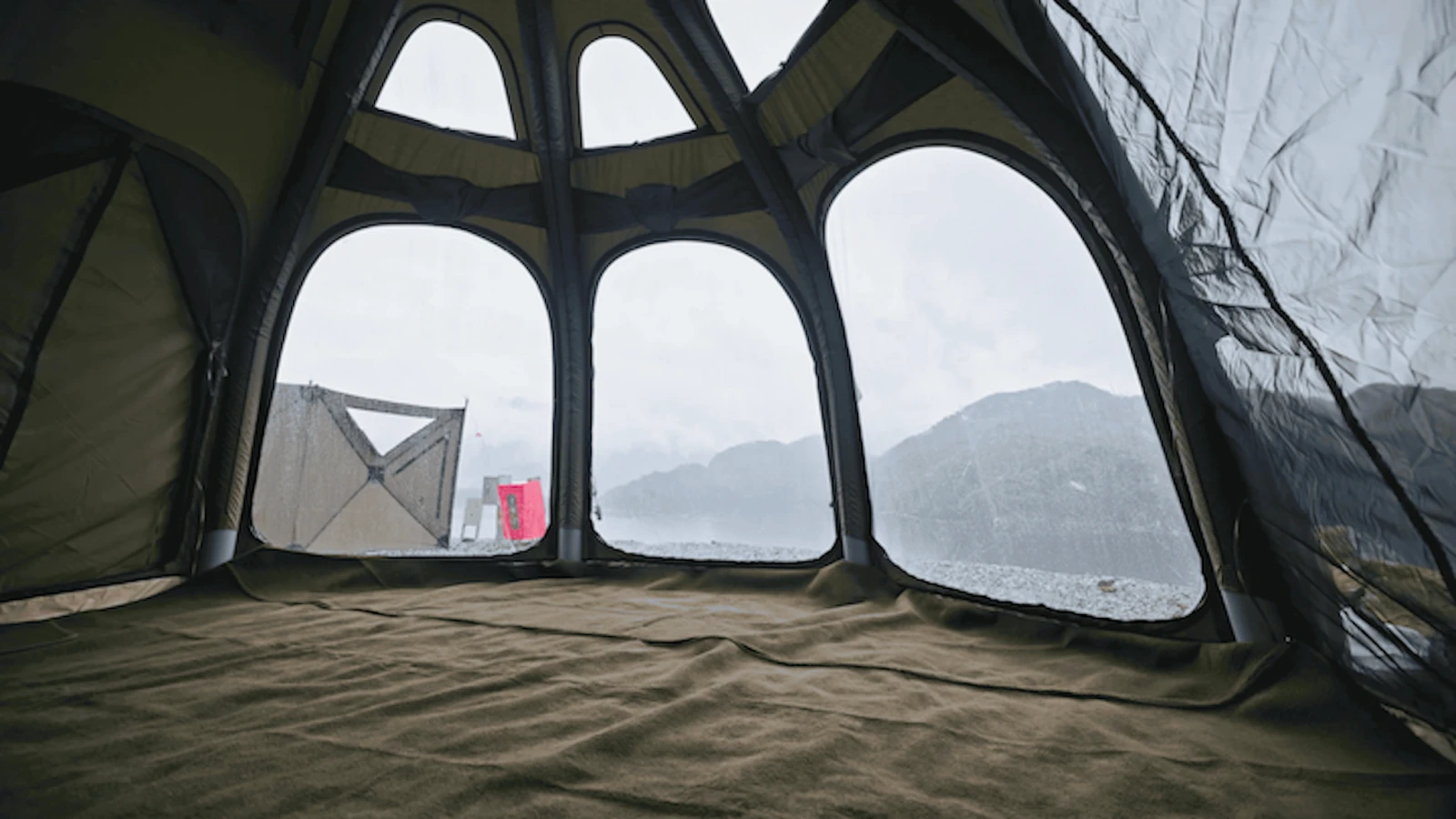
Smart add-ons for cold and all-season camping
Cold-weather accessories can transform a standard shelter into a dependable base in shoulder seasons. A stove jack – properly installed and sized for your pipe – lets you run a small tent stove while routing exhaust safely outside. Pair it with a spark arrestor, heat-resistant pipe sleeve, and a fireproof mat to protect the floor. Ventilation still matters in winter: crack high vents and a door zip at the top to maintain airflow and reduce condensation that can freeze overnight.
Snow skirts (storm flaps at the hem) seal drafts and help anchor the perimeter with snow or sand. In blizzard-prone zones, mid-panel guy-out loops and extra stake points keep walls from pumping in the wind. Heavier zippers and covered sliders resist icing; large grab tabs are glove-friendly.
For shoulder-season comfort, blackout or polycotton panels tame early sun and help regulate temperature, while clear window inserts or roll-back fly sections preserve daylight when the weather calms. An extended canopy or awning creates a dry cooking and entry zone; be sure its poles and guylines are tensioned so meltwater sheds away from doorways.
Utility touches round out livability: an e-port (cable pass-through) for power banks or a small heater fan, reflective guylines for night visibility, and multiple lantern loops for safe, off-stove lighting. Whatever you add, keep weight and pack length in mind – and practice the full winter pitch at home before you trust it in the backcountry.
Quick care and setup tips
- Pick the right spot: firm, well-drained ground, slight rise, doors leeward, and shade for hot afternoons. Clear sharp sticks and cones before you unroll the floor.
- Size the footprint: use one slightly smaller than the floor so rain can’t pool between layers. Tuck any edges under the bathtub walls.
- Stake first, then tension: anchor all four corners, erect the poles, attach the fly, and only then fine-tune line-locs and guylines. Recheck tension after 30–60 minutes as fabrics settle.
- Shape the fly: maintain an even air gap over the inner, use all mid-panel guy-outs in wind, and keep zippers stress-free by staking doors to relieve load.
- Manage condensation: crack a high vent and a low opening, keep wet gear in the vestibule, and avoid pressing sleeping bags against the walls. In cold, vent a little rather than sealing everything.
- Pack and store smart: dry completely before bagging, shake out grit to protect coatings, spot-clean with mild soap, inspect seam tape, carry patches and seam sealer, and store loosely in a cool, dry place.
Bringing it all together
Knowing what each tent part does – body, poles and hubs, rainfly and vents, floor and footprint, stakes and guylines, plus vestibules and storage – turns a wall of specs into practical choices. Match materials and geometry to your terrain, climate, and trip length; size for real comfort, not just headcount; and prioritize a clean pitch with thoughtful ventilation. With a few setup habits and basic care, your shelter will stay taut, dry, and comfortable across seasons, giving you more time to enjoy the campsite instead of fighting with fabric.